
From Object to Subject: Authentic Agency in Hereditary Cancer Care
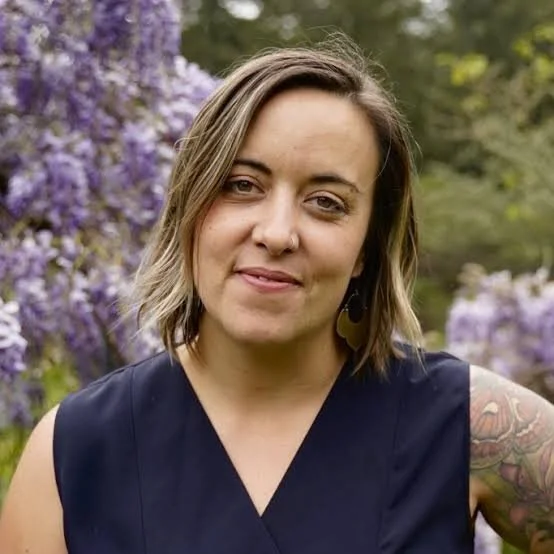
Sara Champie, LCSW
Speaker Biography:
Sara Champie, LCSW is a somatically oriented trauma therapist whose clinical work sits at the intersection of hereditary cancer risk, genetic testing, and developmental trauma. A BRCA1 carrier herself, she brings both clinical and lived expertise to her work with genetic mutation carriers, previvors, and cancer patients navigating high-stakes medical decision-making. She hosts the podcast Walking the Genetic Line, where she explores the lived experience of genetic risk from a trauma-informed perspective.
Abstract:
A hereditary cancer diagnosis, or high risk genetic testing results, never land on neutral ground. For many patients, it reactivates developmental survival strategies — over-functioning, hypervigilance to others' needs, compliance, or disappearing — that were adaptive earlier in life but now shape how they engage with treatment decisions, family disclosure, and their own bodies. Drawing on the NeuroAffective Relational Model (NARM) and somatic trauma theory, this talk maps three domains reliably activated by hereditary cancer risk — attachment, agency, and grief — and walks through five survival strategies clinicians will recognize in the exam room: connection, attunement, trust, autonomy, and love/sexuality. Each is illustrated through a clinical vignette and translated into brief, scope-appropriate relational language naturopathic oncology providers can use without stepping outside their clinical role. The throughline is a simple but consequential shift: from patient as object of management to patient as subject of their own experience. When clinicians can recognize a survival strategy activating in real time, they create room for patients to reclaim agency inside real medical constraints — and to recognize when a patient needs referral to mental health support before distress escalates. The talk closes with a direct argument, grounded in recent integrative oncology referral data, for why psychological support should be a standard part of care for anyone navigating a hereditary cancer diagnosis — not an exceptional referral reserved for visibly struggling patients.